Introduction to DV, OV & EV SSL Certificates and Validation Levels
DV, OV & EV SSL Certificates are the three primary types of digital certificates used to secure websites today. While they all provide encryption for data in transit, they differ significantly in terms of the trust they offer to users. Understanding these differences is vital for any website owner. Consequently, choosing the right certificate can impact your brand reputation and conversion rates.
When you browse the internet, you might notice that some sites feel more secure than others. This perception often comes from the level of validation the Certificate Authority (CA) performed. Furthermore, the selection process for SSL certificates UK businesses use depends heavily on the nature of the website. In this guide, we will break down each type to help you make an informed decision for your digital presence.
What are Domain Validation (DV) Certificates?
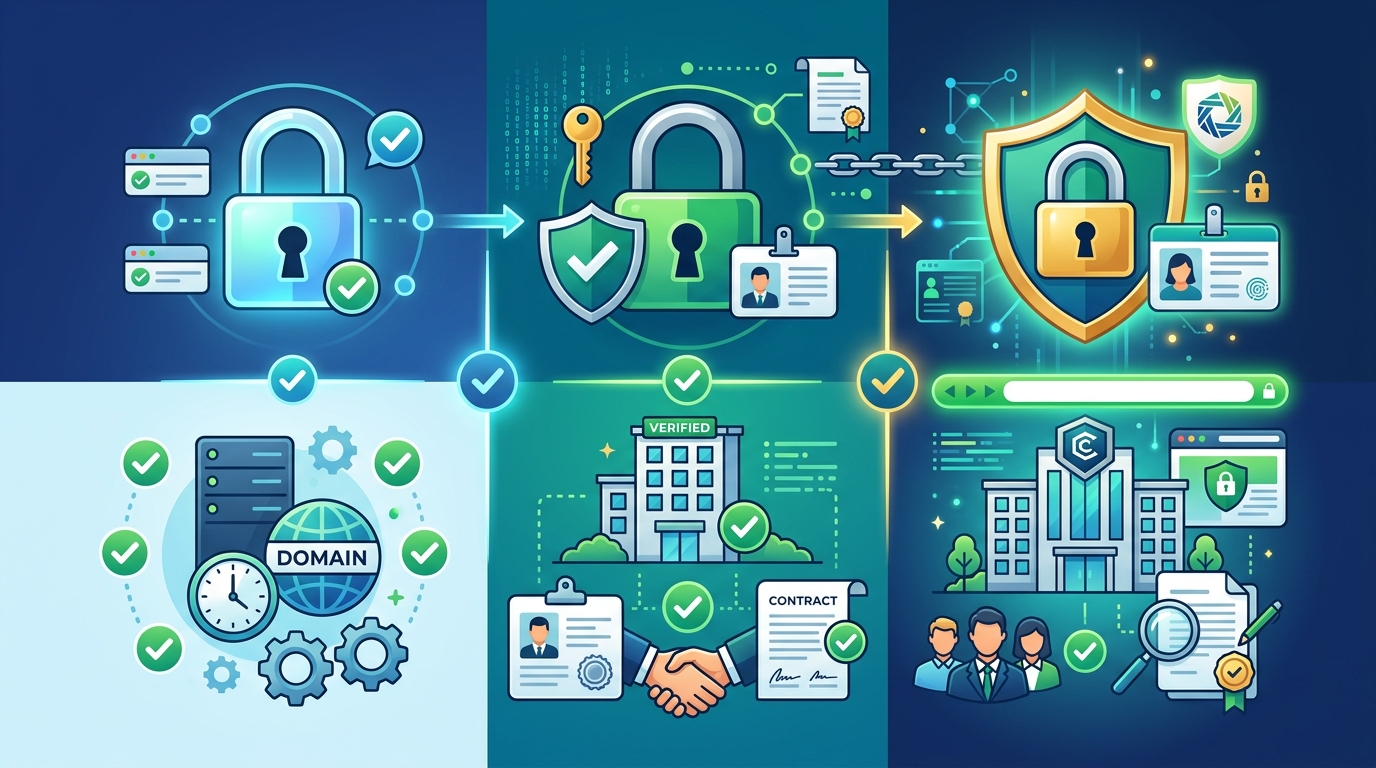
Firstly, we have Domain Validation (DV) certificates. These are the most basic and common type of SSL available. To obtain a DV certificate, you only need to prove that you own or control the domain name. Because the process is automated, CAs usually issue these certificates within minutes. This makes them an excellent choice for personal blogs or small websites.
However, DV certificates offer the lowest level of trust. The certificate only confirms that the data is encrypted and the domain is yours. It does not verify who you are as a person or a business entity. Therefore, hackers often use DV certificates for phishing sites. If you are running a simple informational site, a DV certificate is usually sufficient. But if you handle sensitive user data, you might want more validation.
What are Organization Validation (OV) Certificates?
Secondly, Organization Validation (OV) certificates take security a step further. Unlike DV, the CA actually verifies your business identity. They check legal documents to ensure your company is a registered and legitimate entity. As a result, this process typically takes a few days rather than a few minutes.
When a user clicks on the padlock icon in their browser, they can see your company’s name and location. This added transparency builds confidence. Consequently, many mid-sized businesses and educational institutions prefer OV certificates. It strikes a balance between cost and credibility. If you want to show users that a real company stands behind the website, OV is the way to go.
Read More : SSL Validity Period Changes: A Guide to Staying Secure
What are Extended Validation (EV) Certificates?
Thirdly, we have Extended Validation (EV) certificates. These represent the gold standard of website security. The validation process for EV is rigorous and follows strict industry guidelines. The CA performs a deep dive into your business history, physical existence, and legal status. Because of this high level of scrutiny, EV certificates provide the highest level of trust possible.
In the past, EV certificates displayed a prominent green bar in the browser address bar. While modern browsers have moved away from the green bar, the identity information remains easily accessible. Most large e-commerce platforms and financial institutions use EV certificates. By choosing an EV certificate, you tell your customers that you take their security seriously. For businesses looking for premium SSL UK solutions, EV is the ultimate choice to maximize conversion rates.
DV, OV & EV SSL Certificates: The Critical Differences Explained
To truly understand DV, OV & EV SSL Certificates, we must compare them side-by-side. The primary difference lies in the validation process. DV only checks domain ownership. OV checks the organization. EV performs a comprehensive legal and physical check. Consequently, the time to issue these certificates varies from minutes to over a week.
Another major difference is the price. Generally, DV certificates are the most affordable, while EV certificates are the most expensive. This price difference reflects the manual labor required by the CA to verify your identity. Additionally, the warranties provided by the CA are much higher for EV certificates. For example, if a user loses money due to a certificate failure, the insurance payout for EV is significantly larger than for DV.
Which DV, OV & EV SSL Certificate Should You Choose?
Choosing the right level of security depends on your specific needs. If you are running a personal project, a DV certificate is perfect. It is fast, cheap, and provides encryption. On the other hand, if you are a legitimate business, you should consider at least an OV certificate. It helps differentiate your site from anonymous and potentially malicious actors on the web.
Furthermore, if you run an online store or a banking portal, you should not settle for anything less than EV. High-traffic sites need to build as much trust as possible. Research suggests that users are more likely to complete a purchase on a site that displays a high level of validation. Therefore, the investment in an EV certificate often pays for itself through increased sales and customer loyalty.
Technical Similarities and Differences Between DV, OV & EV SSL Certificates
It is important to note that from a technical standpoint, all three certificates provide the same level of encryption. Whether you use DV, OV, or EV, your data is protected by industry-standard protocols. You can learn more about the technical specifications of Public Key Infrastructure on Wikipedia. The difference is not in how the data is scrambled, but in how the identity of the server is verified.
Modern browsers treat all valid SSL certificates similarly in terms of the padlock icon. However, the metadata contained within the certificate is what sets them apart. Advanced users and security tools look for this metadata to assess the risk level of a website. Consequently, having a higher validation level can protect your site from being flagged by certain security filters.
Implementing SSL Certificates UK
For businesses operating in the United Kingdom, local trust is essential. Using recognized SSL certificates UK providers ensures that your validation process aligns with local business standards. Moreover, local support can be a lifesaver if you encounter issues during the installation or validation phases. Whether you are in London, Manchester, or Edinburgh, securing your site with the right certificate is a non-negotiable step in your digital strategy.
When you purchase a certificate, make sure to follow the installation instructions carefully. Most modern hosting environments make this easy. However, for EV and OV certificates, you must be ready to provide documentation such as business registration papers. Being prepared will speed up the process and get your site secured faster.
Conclusion: Choosing the Right DV, OV & EV SSL Certificate
In conclusion, the difference between DV, OV & EV SSL Certificates comes down to the level of trust and identity verification. DV is for speed, OV is for business identity, and EV is for maximum credibility. Each serves a specific purpose in the digital ecosystem. By understanding these levels, you can choose the best protection for your audience.
Don’t leave your website’s security to chance. Evaluate your business goals and the expectations of your users today. If you need expert guidance on choosing the right security path, SSL UK is here to help you navigate the complexities of web encryption. Secure your website now and build a safer internet for everyone.